Table of Contents
- 1. The Growing Importance of Multi-DRM for Modern Platforms
- 2. Understanding Digital Rights Management in Video Distribution
- 3. Challenges in Secure Content Distribution
- 4. How Multi‑DRM Solutions Enhance Content Security for OTT Platforms
- 5. Key Features to Look for in Multi‑DRM Providers
- 6. Multi‑DRM Providers vs Traditional DRM Systems
- 7. Industries That Benefit from Multi‑DRM Providers
- 8. Best Practices for Implementing a Multi‑DRM Solution
- 9. Conclusion
- 10. FAQs
If you’re running an OTT platform, subscription service, or even distributing premium video content, you already know that securing your content is as important as creating it. In 2024, the global OTT market surpassed 1.5 billion paid subscribers, with projections expecting over 2 billion by 2027. With this massive growth comes increasing risks: unauthorized access, piracy, and revenue loss are real threats.
This is where multi-DRM providers become essential. By combining multiple digital rights management services, these solutions ensure your content is secure across all devices, operating systems, and platforms. In this guide, we’ll break down everything you need to know, from the basics of content protection technology to choosing the right multi drm solution and implementing it effectively.
The Growing Importance of Multi-DRM for Modern Platforms
When it comes to video distribution, users expect seamless playback on any device. At the same time, content creators want to protect their intellectual property and ensure revenue streams remain intact. Balancing these needs is where multi-DRM providers shine, offering effective DRM solutions for subscription platforms that secure content, prevent piracy, and maintain smooth playback for all users.
Unlike traditional DRM systems, which might only support one protocol or device type, a multi drm system ensures your content works across all major platforms, including Android, iOS, Smart TVs, gaming consoles, and browsers. It removes the need for multiple implementations and reduces compatibility issues, making your platform more user-friendly while staying secure. From a user perspective, this means that whether your audience watches on a tablet, laptop, or Smart TV, the experience is seamless, with no annoying errors, no unsupported devices, just smooth streaming.
Understanding Digital Rights Management in Video Distribution

Before diving deeper into multi-DRM providers, it’s important to understand digital rights management for video platforms, the technology that controls how digital content is accessed, shared, and protected. DRM is essentially the technology that controls how digital content is used, shared, and accessed. For video platforms, this means encrypting your videos and defining who can watch them, for how long, and on which devices.
Modern content protection technology for video platforms goes beyond simple encryption. It includes license management, authentication, usage policies, and sometimes forensic watermarking. This ensures that even if someone tries to copy or share your content, it remains protected.
Challenges in Secure Content Distribution
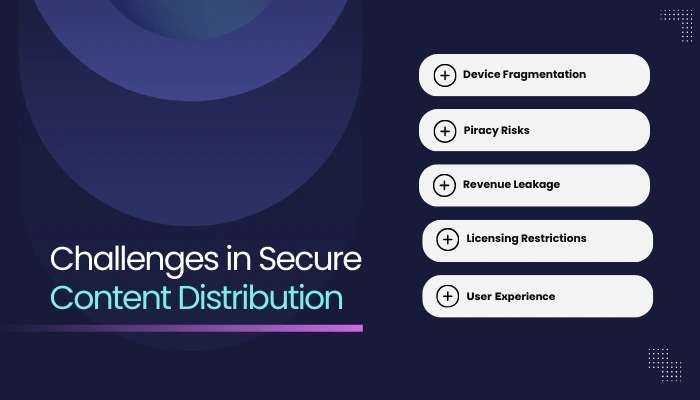
Even with DRM, there are several challenges in secure content distribution that content providers face:
- Device Fragmentation: Multiple devices with different DRM support can make content delivery complex.
- Piracy Risks: Hackers constantly find ways to bypass DRM and share content illegally.
- Revenue Leakage: Unauthorized sharing, account selling, or downloads impact your earnings.
- Licensing Restrictions: Some content is only licensed for certain regions or user tiers.
- User Experience: Overly restrictive DRM can frustrate users, causing churn.
By implementing the right multi-DRM providers, you can address these challenges while maintaining a seamless experience for your users.
How Multi‑DRM Solutions Enhance Content Security for OTT Platforms
A multi-DRM solution is not just a security tool, but it’s a way to future-proof your platform. Here’s how it helps:
1. Seamless Multi-Device Support
Your users do not care about DRM technology; they just want to watch. Multi DRM ensures your content works across Android, iOS, Smart TVs, and desktops without any issues.
2. Centralized License Management
Managing encryption keys and access rights can be complicated. Multi-DRM providers offer a unified license server, simplifying administration and reducing errors.
3. Strong Anti-Piracy Measures
Integrated video piracy prevention solutions like forensic watermarking, token-based authentication, and monitoring tools help detect and prevent content theft.
4. Flexible Access Control
Whether you’re offering rentals, subscriptions, or regional access, multi-DRM allows dynamic rules so users only see what they are authorized to access.
5. Scalability
As your platform grows, multi-DRM providers ensure your content security scales with demand, maintaining a smooth experience even during peak streaming times.
Key Features to Look for in Multi‑DRM Providers
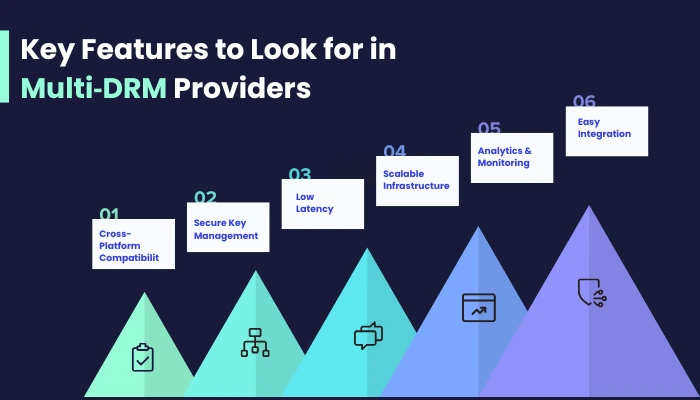
Choosing the right provider is crucial. From a user and platform perspective, here’s what to prioritize:
- Cross-Platform Compatibility: Ensure all devices and DRM types are supported.
- Secure Key Management: Your encryption keys should be safe from breaches.
- Low Latency: Fast license delivery ensures no buffering or delays.
- Scalable Infrastructure: As subscribers grow, the system should handle high loads.
- Analytics & Monitoring: Real-time reporting helps detect piracy attempts and unusual activity.
- Easy Integration: APIs and SDKs make implementation smoother with your platform.
By focusing on these features, you ensure your content security for OTT platforms is reliable, and your users enjoy uninterrupted access.
Multi‑DRM Providers vs Traditional DRM Systems
Understanding the shift requires examining how traditional DRM stacks up against Multi-DRM across essential features:
| Feature | Traditional DRM | Multi-DRM Providers |
| Device Support | Limited | Broad, Cross Platform |
| Protocols | Single | Multiple(Widevine,PlayReady,FairPlay) |
| License Management | Manual | Centralized and Seamless |
| User Experience | Often Inconsistent | Smooth and Seamless |
| Maintenance | High | Low, Easier Updates |
Industries That Benefit from Multi‑DRM Providers
While OTT streaming is the most obvious beneficiary, several industries gain from multi-DRM. Across all these industries, multi-DRM providers provide a secure, scalable, and user-friendly content delivery solution.
- Subscription Video on Demand (SVOD): Protect episodic content and feature films.
- Live Sports & Events: Ensure secure real-time streaming for global audiences.
- Educational Platforms: Protect premium tutorials, lectures, and courses.
- Gaming & esports: Secure in-game content, streams, and replays.
- Corporate Training & Media: Protect sensitive internal content.
Best Practices for Implementing a Multi‑DRM Solution
Implementing DRM effectively requires more than just picking a provider. Here’s how to do it right:
- Audit Your Devices & Users: Know where and how your audience consumes content.
- Combine DRM with Watermarking: Forensics makes tracing leaks easier.
- Monitor & Analyze Activity: Detect suspicious behavior and unauthorized access.
- Rotate Keys Regularly: Prevent long-term breaches.
- Educate Users: Explain security measures to reduce support friction.
- Choose Scalable Providers: Ensure your Multi-DRM solution grows with your platform.
Conclusion
In the era of OTT and subscription streaming, securing your content is non-negotiable. Multi-DRM providers allow you to protect your videos while delivering a seamless experience across devices. From managing licenses and encryption to combating piracy and ensuring scalability, these solutions empower content owners to monetize effectively and expand globally. Whether you’re starting a new platform or enhancing an existing one, adopting the right multi drm solution and implementing content protection technology services strategically ensures your content remains secure, your users remain happy, and your business thrives.
FAQs
1. What are Multi-DRM providers?
Ans. Multi-DRM providers are services that allow content creators and OTT platforms to securely deliver video content across multiple devices and operating systems. By supporting different DRM technologies in a single solution, they ensure seamless playback for users while preventing unauthorized access and protecting valuable subscription content.
2. Why should OTT platforms use Multi-DRM solutions?
Ans. OTT platforms use multi-DRM solutions to manage content protection efficiently. They help prevent piracy, enforce licensing restrictions, and ensure smooth playback across devices. This unified approach simplifies content distribution while maintaining revenue security and providing viewers with a reliable and frustration-free streaming experience.
3. How does digital rights management work for videos?
Ans. It encrypts video content and defines who can access it, on which devices, and for how long. It includes license delivery, authentication, and policy enforcement. Implementing DRM helps platforms secure premium content, protect revenue, and maintain a consistent, uninterrupted experience for their subscribers.
4. Can Multi DRM prevent piracy completely?
Ans. While no system is completely foolproof, multi-DRM providers drastically reduce piracy risks. When combined with anti-piracy measures like watermarking and monitoring, a multi-DRM system makes unauthorized sharing difficult and traceable. This ensures content remains secure while providing legal subscribers with smooth access.
5. What features are important in a multi-DRM solution?
Ans. Key features include cross-platform compatibility, centralized license management, secure key handling, low-latency license delivery, scalability, and analytics. These features ensure your video content is well-protected, playback is seamless, and potential piracy or access issues are quickly identified and resolved.
6. Which industries benefit from multi-DRM providers?
Ans. Besides OTT and subscription platforms, multi-DRM providers benefit live sports, gaming, educational content, corporate training, and media companies. Any organization delivering premium video content can use a multi-DRM system to secure its assets, prevent unauthorized access, and ensure a consistent, reliable viewing experience for its audience.