Table of Contents
- 1. The Shift Toward Interactive Streaming
- 2. Why DRM Security Matters in 2025
- 3. The Role of Multi-DRM in a Secure Way of Streaming
- 4. Key Benefits of Choosing the Right Multi-DRM Platform
- 5. Why Interactive Streaming is a Game-Changer for Businesses
- 6. Future-Proofing with the Right Partner
- 7. Conclusion
- 8. FAQs
In 2025, the digital content industry is evolving faster than ever. Businesses across media, education, healthcare, and enterprise collaboration are no longer relying only on one-way broadcasts. The demand is shifting toward two-way live streaming, where interaction between broadcasters and audiences creates new opportunities for engagement, personalisation, and monetisation.
But this transformation brings an equally critical challenge to security. With sensitive content being shared in real time, ensuring protection against piracy, unauthorised access, and data breaches is paramount. This is where the best multi-DRM platform becomes a game-changer for enterprises.
The Shift Toward Interactive Streaming
Traditional one-way live streaming allowed viewers to watch content passively. However, modern audiences demand more than just passive viewing, they want something where they can interact directly through chat, polls, virtual Q&A, or even on-screen participation.
For businesses, this opens up new revenue opportunities, which include:
- Education: Universities can create interactive digital classrooms.
- Healthcare: Doctors can host secure telemedicine sessions with patients.
- Enterprises: Corporate teams can collaborate on projects across geographies.
- Media & Entertainment: OTT platforms can host live events with fan engagement.
This level of interactivity is valuable, but it increases risks if not supported by secure, enterprise-grade DRM solutions.
Why DRM Security Matters in 2025
Digital Rights Management (DRM) is not new, but its role has been expanded dramatically. In today’s environment, securing interactive sessions is not just about blocking piracy. It is also about protecting:
- Confidential corporate data shared during live sessions.
- Premium media content streamed through OTT platforms.
- Personal user data is exchanged during interactive features.
Without robust DRM protection, organisations expose themselves to risks of leaks, content theft, and compliance violations.
The Role of Multi-DRM in a Secure Way of Streaming
Each device, be it iOS, Android, Smart TVs, or web browsers, has its own DRM technology (Apple FairPlay, Google Widevine, Microsoft PlayReady). For enterprises, managing these individually can become complex, time-consuming, and costly.
A multi-DRM solution solves this by delivering a unified security framework. Businesses can seamlessly stream content across devices while ensuring compliance with licensing terms. This is where multi-DRM providers become essential, they simplify the complexity of handling multiple DRM systems, offering a single integrated solution that protects content everywhere.
Key Benefits of Choosing the Right Multi-DRM Platform
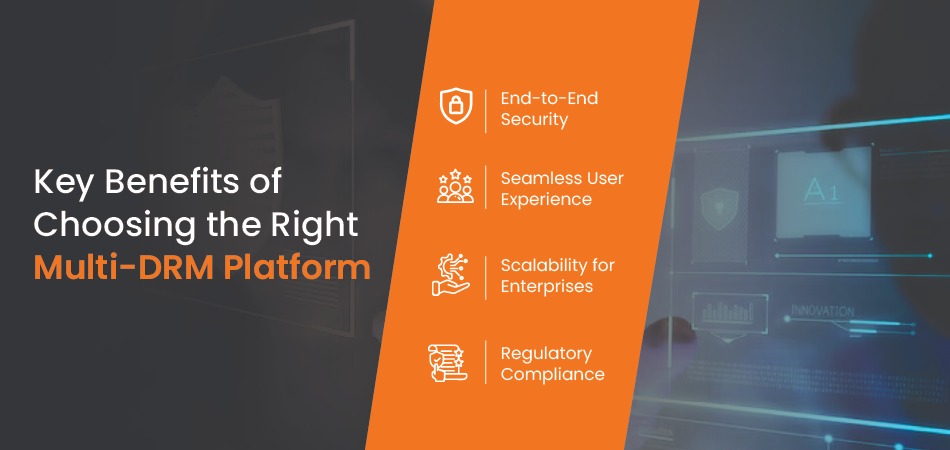
1. End-to-End Security
From content ingestion to delivery, multi-DRM ensures encryption, secure key exchange, and real-time access management. This means both live and interactive data remain fully protected.
2. Seamless User Experience
Security should not disrupt the viewing experience. With the right platform, businesses can deliver secure live streaming without buffering, blackouts, or device compatibility issues.
3. Scalability for Enterprises
Whether it’s a small internal meeting or a global OTT launch, the platform must handle scalability without compromising security.
4. Regulatory Compliance
Industries like healthcare and education demand compliance with strict data protection laws. A trusted DRM solution ensures businesses remain compliant while delivering interactive services.
Why Interactive Streaming is a Game-Changer for Businesses
Beyond security, interactive streaming is becoming a business differentiator. Companies that adopt secure two-way streaming see:
- Higher engagement rates: Audiences interact instead of passively consuming.
- Improved monetisation models: Brands can introduce paid interactive features or premium participation.
- Better customer insights: Real-time interaction generates valuable data.
However, none of these benefits can be realised if content and communication are left vulnerable. DRM provides the trust foundation that enables enterprises to innovate confidently.
Future-Proofing with the Right Partner
Choosing the right DRM strategy is not about today’s requirements, it is about preparing for tomorrow. As AI-driven personalisation, real-time analytics, and immersive technologies like AR/VR enter live streaming, the security risks will only grow.
Enterprises need more than just a vendor they need a long-term partner who can deliver scalable, compliant, and future-ready DRM solutions. By investing in the multi-DRM platform, businesses ensure they can adapt to new technologies without compromising content or user trust.
Conclusion
In 2025, secure streaming is not optional, but it is the foundation of digital business success. As organisations embrace two-way video streaming to engage audiences and unlock new revenue streams, protecting that experience is critical.
With the right multi-DRM providers, enterprises can deliver interactive, scalable, and secure live sessions across devices and industries. The future of streaming belongs to those who combine innovation with trust, and DRM is at the centre of that transformation.
FAQs
1. What is a multi-DRM platform, and why do I need it for live streaming?
Ans: A multi-DRM platform protects your live streams by supporting all major DRM systems, Widevine, FairPlay, and PlayReady. You need it to secure content across every device without managing separate DRM technologies manually.
2. How does DRM improve security for two-way live streaming?
Ans: DRM encrypts both video content and interactive data exchanged during live sessions. This prevents unauthorised access, screen capture abuse, and content leaks, and protects sensitive user information in real time.
3. Is multi-DRM necessary if I already use HTTPS or token-based security?
Ans: Yes. HTTPS and tokens protect access, but DRM protects the actual video file. Without DRM, content can still be downloaded, copied, or pirated, even with other security layers in place.
4. Can multi-DRM affect buffering or playback quality?
Ans: A good multi-DRM provider ensures smooth playback by optimising for each device. With proper integration, DRM runs in the background without causing buffering, delays, or access issues.
5. Which industries benefit the most from secure two-way streaming?
Ans: Education (virtual classrooms), healthcare (telemedicine), enterprises (internal communication), OTT platforms (premium content), and event companies benefit the most because they handle sensitive or paid content.